Scandinavian vs Canadian technology — why we build the Scandinavian way
Canadian and Scandinavian are two different timber frame building philosophies. We explain key differences in insulation, airtightness, prefabrication, and quality — and why Wood Solutions chose Scandinavian technology.
On the European market, the terms “Canadian houses” and “Scandinavian houses” are often used interchangeably. In reality, these are two different timber frame building philosophies that differ in their approach to insulation, airtightness, quality control, and prefabrication. Here's why Wood Solutions chose Scandinavian technology.
What is Canadian technology?
Canadian technology (platform framing) is a timber frame building method developed in North America since the 19th century. Construction takes place on-site — floor by floor. Load-bearing studs are assembled directly at the building site, and insulation is fitted between them after the full structure is erected.
This technology is popular due to its simplicity and accessibility. It requires relatively modest infrastructure — a building crew can put up a house on-site without needing a factory or heavy equipment.
What is Scandinavian technology?
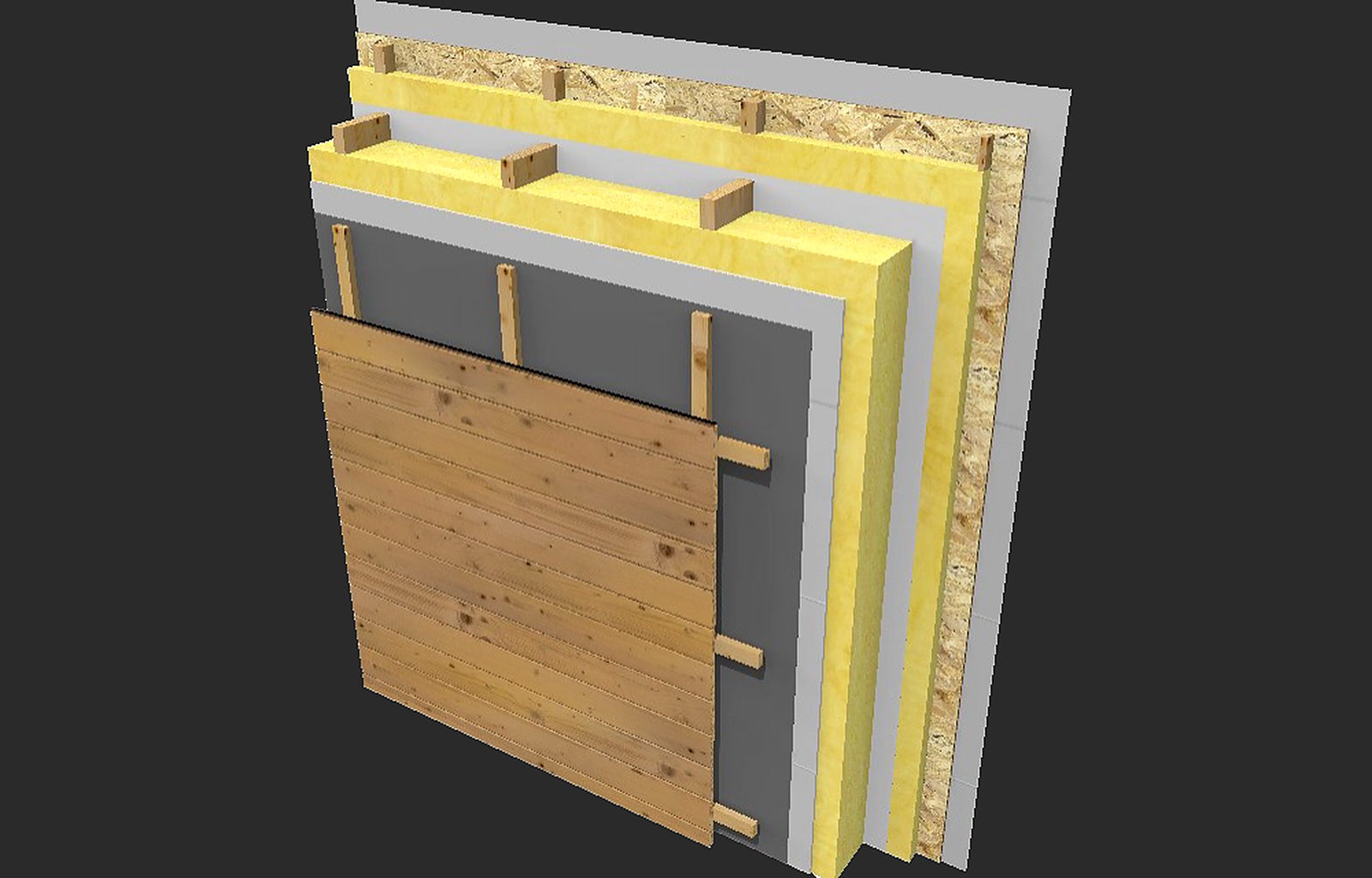
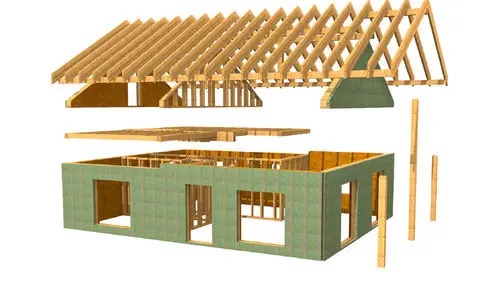
Scandinavian technology is a factory prefabrication system developed in Nordic countries (Sweden, Norway, Finland), where climate requirements and building standards are among the strictest in the world. Complete wall, floor, and roof panels are produced under controlled factory conditions, then transported to the building site and assembled.
Key differences
1. Prefabrication vs on-site construction
Canadian: structure built on-site. Elements cut and assembled on location, exposed to weather during construction. Moisture, rain, frost — timber can absorb water before it's protected.
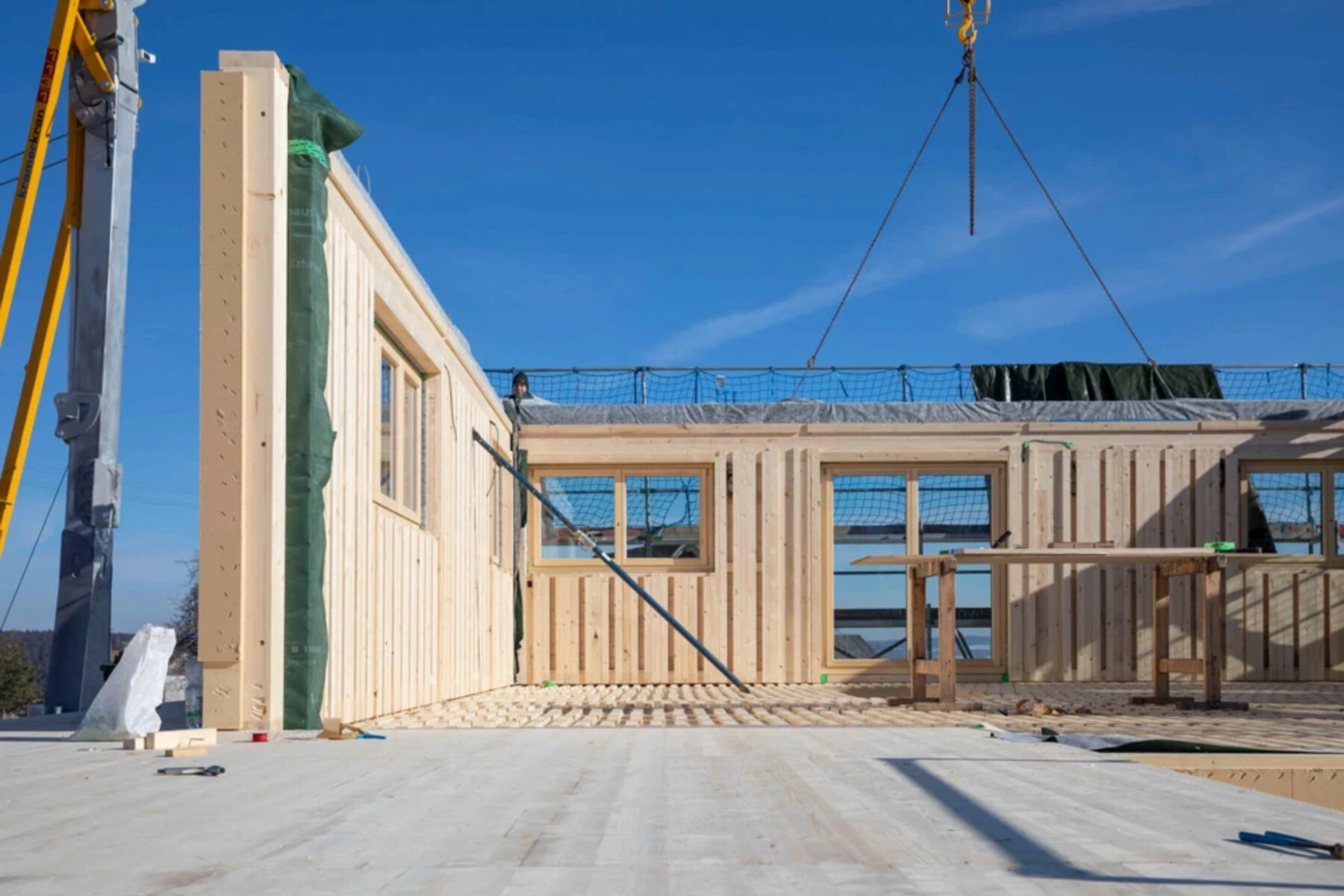
Scandinavian: wall panels manufactured in a factory hall with controlled humidity and temperature. Timber is never exposed to precipitation. On-site assembly takes days, not weeks — the house reaches shell stage within days of delivery.
2. Insulation thickness and quality
Canadian: typical insulation thickness is 140–160 mm (2x6" studs). Insulation fitted manually between studs on-site — risk of gaps, thermal bridges, and air leaks.
Scandinavian: 200–250 mm insulation in the structure + additional installation grid with inner insulation layers. At Wood Solutions, standard insulation thickness is 245 mm, achieving wall U = 0.13 W/m²K. Insulation fitted by machine in the factory — evenly, without gaps.
3. Airtightness
Canadian: vapour barrier installed on-site — quality depends on crew diligence. Joints and corners are often weak points. Blower-door tests are not standard.
Scandinavian: vapour barrier with Sd > 100 m installed under factory conditions, with controlled joints and sealing tapes. Each panel connection is secured according to procedure. Result: airtightness at passive house levels.
4. Quality control
Canadian: quality depends on crew qualifications and diligence. Every build is unique — different conditions, different people, different results.
Scandinavian: factory production with multi-stage quality control. Every panel measured, photographed, inspected before shipment. Process repeatability guarantees uniform standard regardless of building location.
5. Structural timber
Canadian: often uses SPF (spruce/pine/fir) lumber, visually graded. Timber moisture content may be higher, leading to swelling and shrinking after construction.
Scandinavian: KVH C24 timber kiln-dried to 12–15% moisture, with certified strength. Dimensional stability — no deformation, cracking, or “working” of timber after assembly.
Why does Wood Solutions build the Scandinavian way?
We chose Scandinavian technology because it delivers higher, repeatable quality standards. Every house produced in our factory in Lielvarde (Latvia) goes through the same quality control process — whether it's destined for Norway, Poland, or Switzerland.
- Better insulation (U = 0.13 W/m²K vs typical 0.20–0.25 in Canadian technology)
- Higher airtightness — lower heat losses
- Controlled production conditions — timber never gets wet
- Faster on-site assembly — lower risk of weather delays
- Certified C24 timber — guaranteed strength
- Photographic documentation of every panel — full transparency
Summary
Canadian technology has its advantages — it's simpler and more accessible in markets lacking factory infrastructure. But if you value the highest insulation, execution precision, and repeatable quality — Scandinavian technology is the better choice. And that's exactly how we build.