Energy efficiency of timber frame houses — how much can you really save
U=0.13 W/m²K, EUco<35 kWh/m²/year, ~€415 annual heating cost on 120 m² — see how frame technology delivers real money savings throughout exploitation.
Energy efficiency is not a slogan. It’s the numbers on your electricity bill. We show how Wood Solutions frame technology translates into ~€1,150 annual savings over 30 years — ~€35,000 in your pocket compared to a masonry house.
What the U-values say
EUco (non-renewable primary energy demand) is the key indicator of WT 2021 compliance. Max allowed: 70 kWh/m²/year. Our standard houses go down to 35 kWh, passive to 15 kWh. For comparison: a 1990s masonry house — 130–180 kWh/m²/year.
Three pillars of efficiency
1. Thicker insulation than anywhere
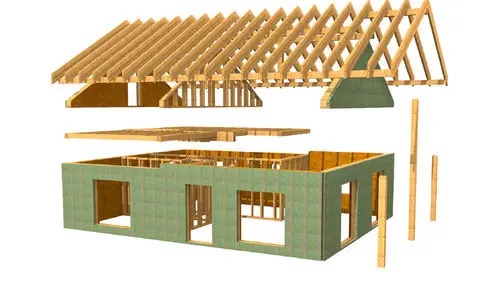
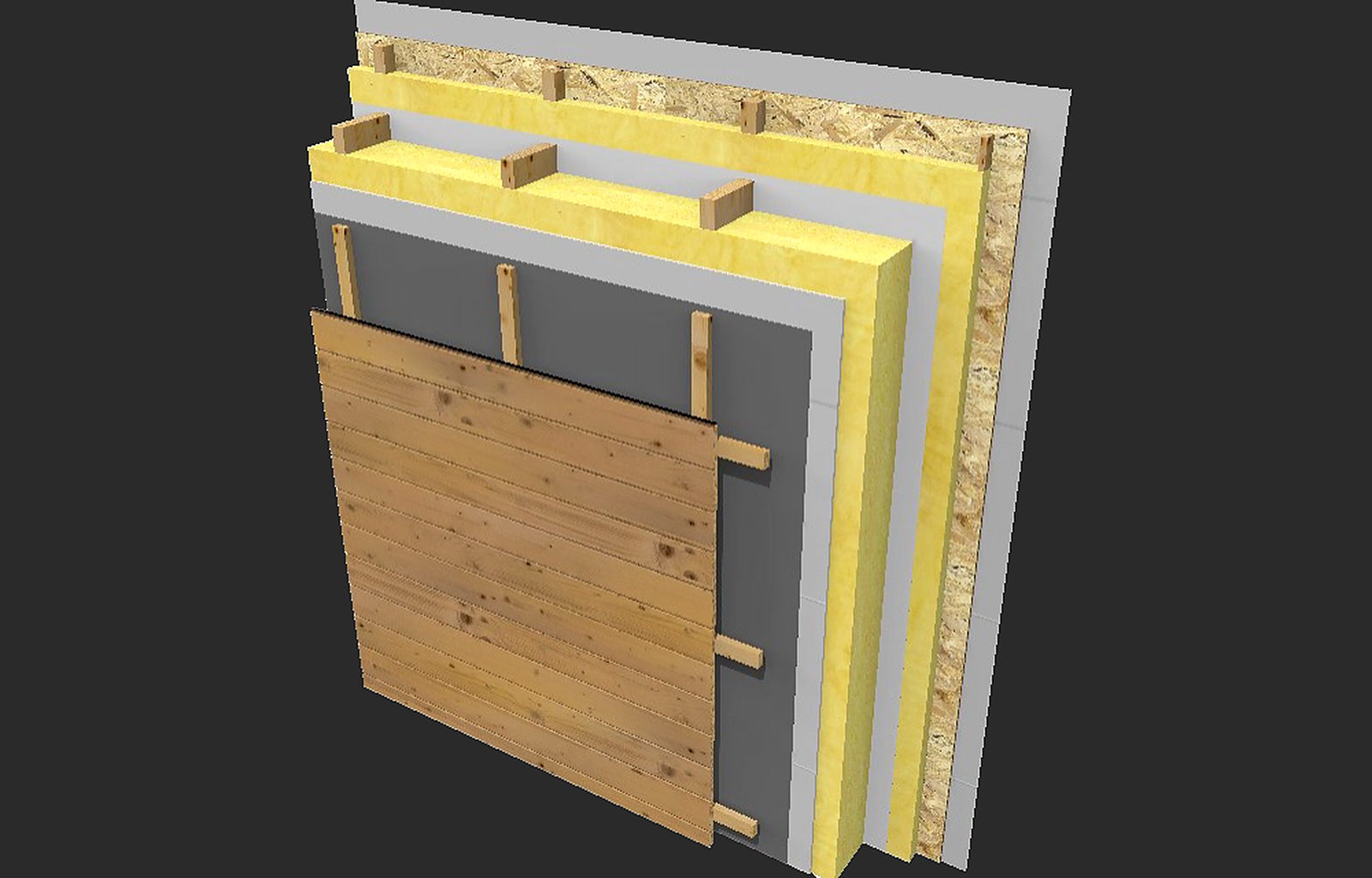
200 mm wool wall + vapour barrier + 50 mm installation grid = U = 0.13. 250 mm roof wool + 50 mm acoustic = U = 0.13. Floor on ground with 200 mm XPS = U = 0.13. Passive standard — no Polish masonry house has it by default.
2. Air-tightness — n50 < 1.0
Blower Door test shows air leakage at 50 Pa. WT 2021: <3.0/h. Passive: <0.6/h. Wood Solutions standard: 1.0/h (verified at every developer/turnkey delivery). Achieved by continuous vapour barrier with sealed panel joints.
3. Mechanical ventilation with heat recovery
Counter-flow heat exchanger recovers 90–93% of heat from exhaust air. No losses on gravity ventilation = additional saving €350–460/year at 120 m². Standard in developer/turnkey packages.
Heat pump + PV — nearly self-sufficient house
Frame-level air-tightness combined with air-water heat pump and PV is now market standard. Numbers for 120 m²:
- Annual consumption: 11 000 kWh (heating + DHW + appliances).
- Heat pump 9 kW — COP 4.5 → 2 450 kWh electric for heating.
- PV 6 kWp — produces ~5 800 kWh/year.
- Net balance: ~-2 500 kWh from grid, cost: €415–650/year.
Comfort that economy doesn’t measure
- Stable indoor temperature (±1°C daily) without “cold walls”.
- No drafts — air-tightness + heat recovery.
- Filtered air (F7) — less dust, pollen.
- Stable humidity 40–55%.
- Quiet acoustics — vapour barrier + wool.